
PG vs Co-Living vs Rental Flats: What Works Best for Students in 2026?
A Practical Guide to Smarter Student Living
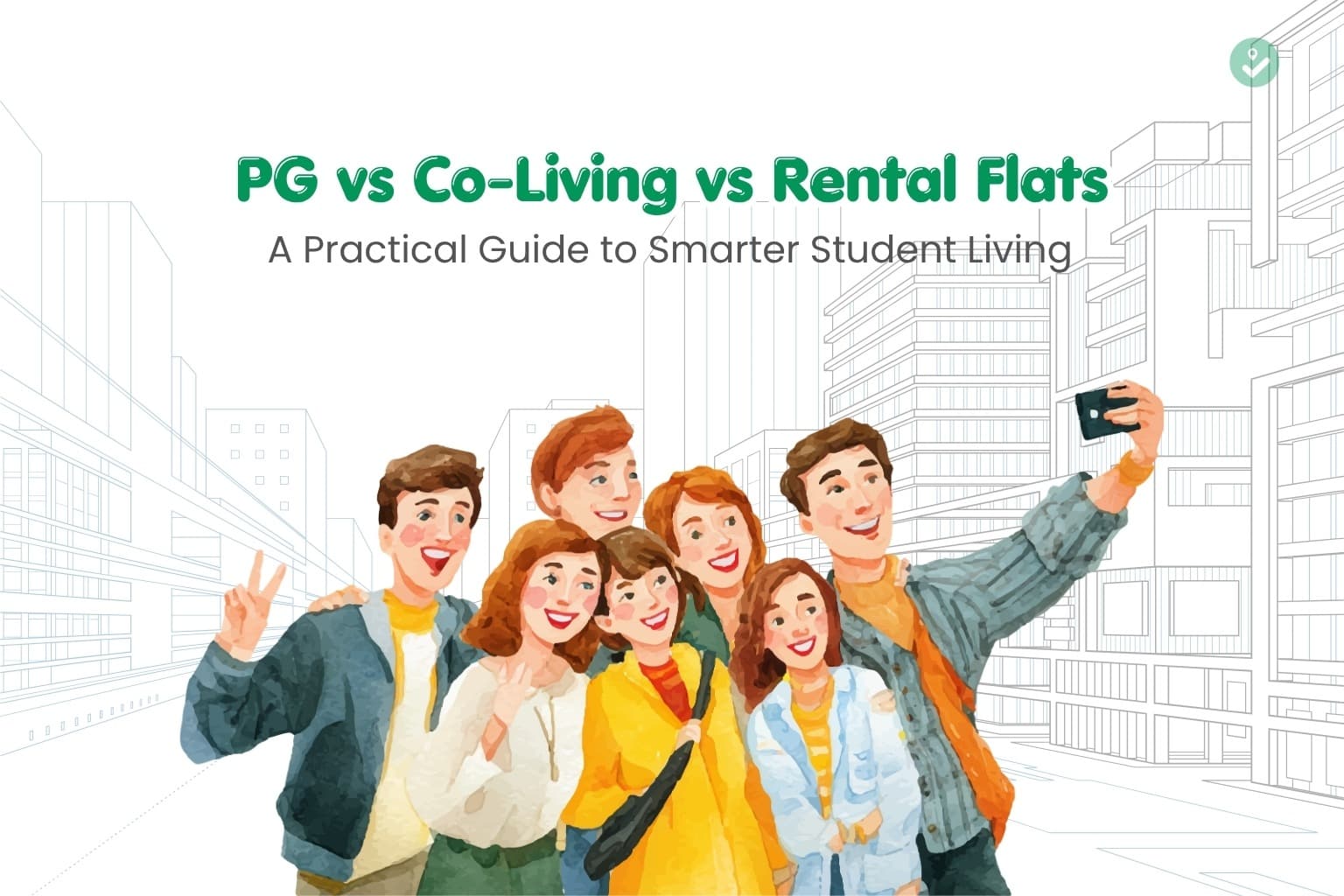
Student living in India is evolving rapidly. What used to be a simple choice between hostel and PG has now expanded into multiple options - PG accommodations, co-living spaces, and rental flats.
In 2026, students are not just looking for a place to stay. They are looking for comfort, flexibility, affordability, and a lifestyle that supports their daily routine.
This raises an important question:
Which option actually works best for students today?
Understanding the Options
Before choosing, it’s important to understand what each option offers.
PG (Paying Guest Accommodation)
PGs remain the most common choice for students, especially in metro and tier-2 cities.
What you get:
Furnished room
Meals (in most cases)
Basic amenities (Wi-Fi, housekeeping)
Best suited for:
Students looking for a simple, budget-friendly, and hassle-free setup
Co-Living Spaces
Co-living is a relatively new concept that combines convenience with community living.
What you get:
Fully furnished modern spaces
Managed services (cleaning, maintenance)
Community events and shared areas
Best suited for:
Students who prefer a modern lifestyle with flexibility and social interaction
Rental Flats
Rental flats offer complete independence and control over your living environment.
What you get:
Full privacy
Freedom to customize your space
Option to share with friends
Best suited for:
Students who value independence, space, and long-term stability
Key Comparison: What Actually Matters in 2026
1. Cost & Affordability
PG: Most affordable option with predictable monthly expenses
Co-Living: Slightly higher cost due to added services
Rental Flats: Variable cost (rent + deposit + utilities)
👉 If budget is a priority, PG remains the easiest choice.
2. Flexibility
PG: Limited flexibility, fixed rules
Co-Living: High flexibility, short-term stays possible
Rental Flats: Moderate flexibility but long-term commitment required
👉 Co-living stands out for students who prefer freedom without responsibility overload
3. Privacy & Independence
PG: Limited privacy
Co-Living: Moderate privacy with shared spaces
Rental Flats: Maximum privacy and control
👉 Rental flats are ideal for those who want complete independence
4. Lifestyle & Experience
PG: Functional, basic living
Co-Living: Community-driven, modern lifestyle
Rental Flats: Personalized, self-managed lifestyle
👉 Gen Z is increasingly leaning towards experience-driven living, making co-living and flats more attractive.
5. Convenience
PG: High (food + basic services included)
Co-Living: Very high (fully managed)
Rental Flats: Low (everything needs to be managed)
👉 PG and co-living are better for students who want less hassle
So, What Works Best in 2026?
There is no one-size-fits-all answer. The right choice depends on your priorities:
Choose PG if you want affordability and simplicity
Choose Co-Living if you want flexibility and a modern lifestyle
Choose Rental Flats if you want independence and long-term comfort
The Real Challenge: Finding the Right Option
While options have increased, the real problem students face today is:
Scattered listings
Inconsistent information
Lack of transparency
Too many platforms, too much confusion
This often leads to delayed decisions and poor choices.
A Smarter Way to Find Student Accommodation
In 2026, the focus is shifting towards centralized and transparent platforms that simplify discovery.
Platforms like Wishke are designed to:
Bring multiple options (PG, co-living, flats) into one place
Enable direct interaction with owners and agents
Provide clearer, more structured information
This makes it easier for students to compare, evaluate, and decide faster.
Conclusion
Student living is no longer just about finding a room - it’s about finding the right environment for your lifestyle and goals.
As choices expand, decision-making becomes more important.
The smartest approach in 2026 is not just choosing between PG, co-living, or flats-
it’s choosing what works best for you, based on clarity, not confusion.
Recent Posts

Home Loan ke 10 Terms Jo Aapko Samajhni Hi Chahiye - Before You Sign
30 Jun 2026

Location, Location, Location: The 8 Questions to Ask Before Buying in Any Area
24 Jun 2026
2 BHK vs 3 BHK: The Decision Framework Indian Families Keep Getting Wrong
23 Jun 2026

Best Real Estate Investment Cities in India for 2026
28 May 2026

Cost Overruns in Construction: Causes and Solutions
28 Apr 2026