
The Hidden Cost of Poor Communication in Real Estate Deals
Why Transactions Don’t Fail - They Break Down
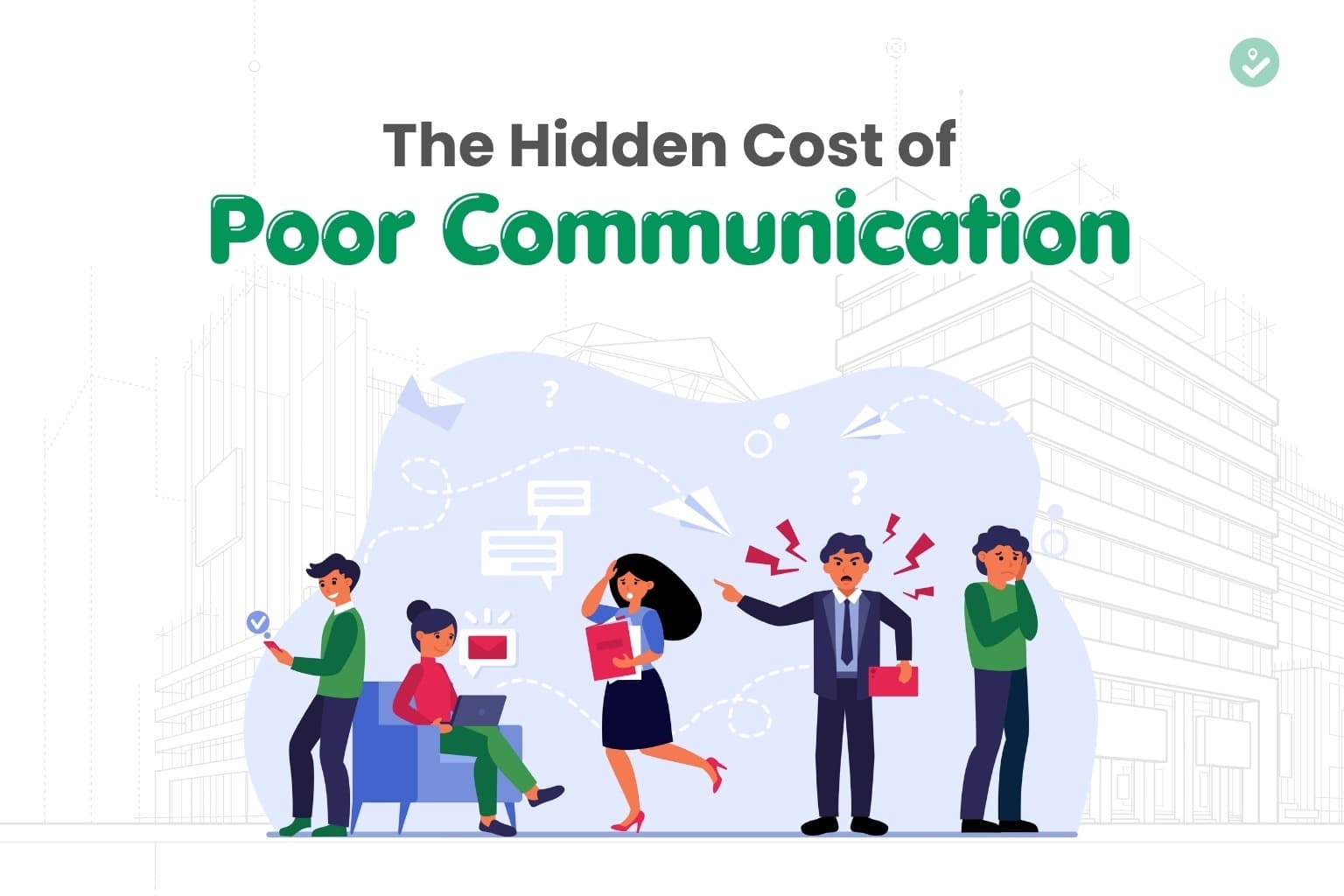
In real estate, failed deals are often attributed to pricing mismatches, market conditions, or location constraints. However, a closer examination reveals a more fundamental issue - one that is less visible but far more impactful.
Poor communication.
Across the transaction lifecycle, from initial enquiry to final closure, communication plays a decisive role. When it lacks structure, clarity, or consistency, even high-intent deals begin to weaken.
More often than not, transactions do not fail due to lack of demand - they fail due to process inefficiencies driven by communication gaps.
The Nature of Communication in Real Estate
Real estate is inherently a multi-stakeholder ecosystem involving buyers, sellers, brokers, and sometimes developers or legal advisors. Each interaction point carries critical information.
In the absence of a structured communication flow, this information becomes:
Fragmented
Delayed
Misinterpreted
This fragmentation creates friction, and friction slows down decisions.
Key Communication Breakdowns
1. Delayed Responsiveness
In a market where buyers evaluate multiple options simultaneously, speed is critical. A delayed response—whether on pricing, availability, or documentation—can immediately shift buyer attention elsewhere.
Time, in this context, is not neutral. It directly impacts conversion.
2. Inconsistent Information
Discrepancies in pricing, specifications, or terms create uncertainty. When buyers receive conflicting information at different stages, confidence erodes.
Consistency is not just operational - it is foundational to trust.
3. Intermediary Distortion
Layered communication involving multiple intermediaries often leads to dilution of intent. Requirements are misunderstood, expectations are misaligned, and clarity is compromised.
The result is inefficiency at every stage of the deal.
4. Unstructured Follow-Ups
Follow-ups without context or strategy reduce effectiveness. Either they overwhelm the buyer or fail to maintain engagement.
Effective follow-up is not about frequency - it is about timing, relevance, and value.
The True Cost of Communication Gaps
While these issues may appear operational, their impact is strategic.
Erosion of Trust
Trust is built through clarity and consistency. Once compromised, it is difficult to rebuild within the same transaction cycle.
Deal Attrition
A significant number of deals are lost not due to rejection, but due to disengagement. Buyers simply withdraw when the process becomes inefficient.
Reduced Productivity
Time spent resolving confusion is time not spent closing deals. This directly affects broker efficiency and revenue potential.
Long-Term Brand Impact
In real estate, reputation compounds over time. Poor communication does not just affect one deal—it influences future opportunities through perception.
Evolving Buyer Expectations
The modern real estate buyer operates with a different mindset:
They are informed and research-driven
They expect transparency across all interactions
They value speed and accuracy
They compare multiple options simultaneously
In such an environment, communication is no longer transactional - it is experiential.
Communication as a Strategic Advantage
In an increasingly competitive market, communication has emerged as a key differentiator.
Professionals who consistently perform well tend to:
Respond with speed and precision
Provide structured and accurate information
Maintain alignment across all stakeholders
Minimize friction in the decision-making process
This is not an operational improvement - it is a strategic shift.
The Need for System-Driven Communication
To address these challenges, the industry must move towards a more structured approach:
Centralized information flow
Standardized data across touchpoints
Reduced dependency on fragmented channels
Clear and direct communication pathways
Such a system enhances not just efficiency, but also confidence across all participants.
Conclusion
Real estate transactions are complex, but their success often depends on simple fundamentals.
Among these, communication remains one of the most critical and most underestimated factors.
Deals rarely collapse due to lack of interest. They collapse due to breakdowns in clarity, speed, and trust.
As the market evolves, the professionals who recognize communication as a core capability - not a secondary function - will be better positioned to close more deals and build lasting relationships.
Recent Posts

Home Loan ke 10 Terms Jo Aapko Samajhni Hi Chahiye - Before You Sign
30 Jun 2026

Location, Location, Location: The 8 Questions to Ask Before Buying in Any Area
24 Jun 2026
2 BHK vs 3 BHK: The Decision Framework Indian Families Keep Getting Wrong
23 Jun 2026

Best Real Estate Investment Cities in India for 2026
28 May 2026
Cost Overruns in Construction: Causes and Solutions
28 Apr 2026